Malisha: A Serif Font for Web Design
Working on a new boutique online store layout, I needed a font that could add a touch of elegance without overwhelming the design. Malisha Serif was the perfect choice. Its balanced structure and smooth curves made it ideal for headers and call-to-action buttons, while still maintaining a professional feel.
Visual Personality and Digital Appeal
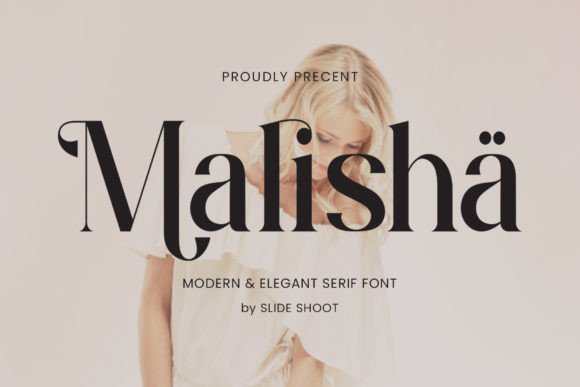
Malisha has a refined and sophisticated look that feels both modern and timeless. Its clean serifs and consistent stroke weights make it highly readable across different screen sizes. Whether used in a hero section or as a logo text, it brings a sense of class to any digital project.
The font’s subtle swashes and ligatures add a decorative touch, making it stand out without being too ornate. It works well in both light and dark mode, which is essential for responsive web design. The contrast between thick and thin strokes ensures clarity even at smaller sizes, which is crucial for mobile users.
Web Design Applications
I tested Malisha in several areas of the website, starting with the hero section. As a display font, it caught the eye immediately, drawing attention to the main message. For the product landing page, it worked beautifully as a heading, pairing well with a simple sans serif for body copy.
On the coaching website, Malisha added a personal and creative flair to the homepage header. It was also effective for the blog graphics, where it helped differentiate featured posts from regular content. In the course sales page, it provided a clear visual hierarchy, guiding users through the content with ease.
For the portfolio site, Malisha served as an elegant title for each project, reinforcing the brand’s identity. In the digital brand kit, it was used for social media graphics, ensuring consistency across all platforms.
Readability and Responsive Performance
One of the key concerns when using a decorative serif font like Malisha is how it performs on mobile devices. Fortunately, it maintains good legibility even at smaller sizes. The spacing between letters is generous enough to prevent crowding, making it suitable for buttons and navigation menus.
When placed over image banners or dark backgrounds, Malisha retained its clarity, which is important for maintaining visual interest without sacrificing usability. On light backgrounds, it didn’t appear too harsh, blending smoothly with the rest of the design.
It also handled responsive layouts well, scaling up and down without losing its character. This makes it a reliable choice for websites that need to look great on all devices.
Font Pairing and Design Flexibility
Malisha pairs exceptionally well with clean, minimal fonts. I used it alongside a sans serif for body text, creating a balanced contrast that enhanced readability without clashing. For more editorial-style designs, it worked well with a simple serif font, adding depth to the overall composition.
In some cases, I paired it with a script font for decorative accents, which gave the design a more personalized feel. This combination was especially effective for promotional landing pages and campaign graphics.
For commercial projects, I checked the font licensing to ensure it was suitable for client work. Malisha offers a range of weights and styles, making it versatile for different design needs. The multilingual support was also a plus, allowing it to be used in various regions without issues.
Limitations and Best Practices
While Malisha excels in display and heading roles, it’s not ideal for long paragraphs of text. Its decorative elements can become distracting when used in large blocks, so it’s best reserved for short phrases, titles, and logos.
It also isn’t the best choice for accessibility-heavy interfaces, such as forms or dashboards, where clarity and simplicity are more important. In these cases, a simpler font would be more appropriate.
When using Malisha in web design, it’s important to test it across different screen sizes and backgrounds. Ensuring that it remains readable and visually appealing is key to a successful user experience.